
If you manage a commercial building, strata complex, or industrial premises in Australia, chances are you have fire doors on site. But what exactly makes a door a fire safety door, and why does the distinction matter for building compliance?
This guide breaks it all down, from how a fire safety door works through to signage requirements, inspection schedules, and who is authorised to certify one.
How a Fire Safety Door Works
A fire safety door is a purpose-built doorset rated to resist the spread of fire and smoke for a defined period. Unlike a standard interior door, every component is specifically tested together as a system. That includes the door leaf (the panel itself), the frame, the seals, self-closing hardware, and any glazed panels.
The door leaf is typically constructed from fire-resistant materials such as treated timber, steel, or a composite core. Intumescent seals run around the edge of the leaf and expand when exposed to heat, sealing the gap between the door and frame to block the passage of smoke and flames. Self-closing mechanisms ensure the door returns to its closed position automatically, which is central to how the system performs under the requirements of the National Construction Code.
Smoke doors operate on a similar principle but are tested to resist smoke rather than fire itself. They are commonly installed in stairwells, corridors, and other paths of travel where smoke control is the priority.
Australian Standards and NCC Requirements
AS 1905.1: construction standards
Under NCC 2022 Volume 1, Specification 12, all required fire doors must comply with AS 1905.1-2015, which covers the construction of fire-resistant doorsets. This standard sets out exactly how a doorset must be built and tested to achieve a Fire Resistance Level (FRL) rating.
Each compliant doorset is required to carry a metal identification tag, showing the test report number, the FRL rating, the manufacturer, and the year of construction (per AS 1905.1, Clause 4.5). This tag is what confirms the door is a certified product, not simply a door that looks the part.
AS 1851: inspection and maintenance schedules
Having a compliant fire door installed is only part of the equation. Routine testing and inspections are governed by AS 1851-2012 (Section 17), which requires:
- An operational test every 3 months, checking that the door closes and latches correctly.
- A detailed inspection every 12 months, covering seals, hardware, frame condition, clearances, and signage.
These inspections need to be recorded in a log. If your building requires an Annual Essential Services report, your fire door records will form part of that documentation. Our team provides fire door testing in Perth and can keep your building on schedule and compliant.
Mandatory Fire Safety Door Signage
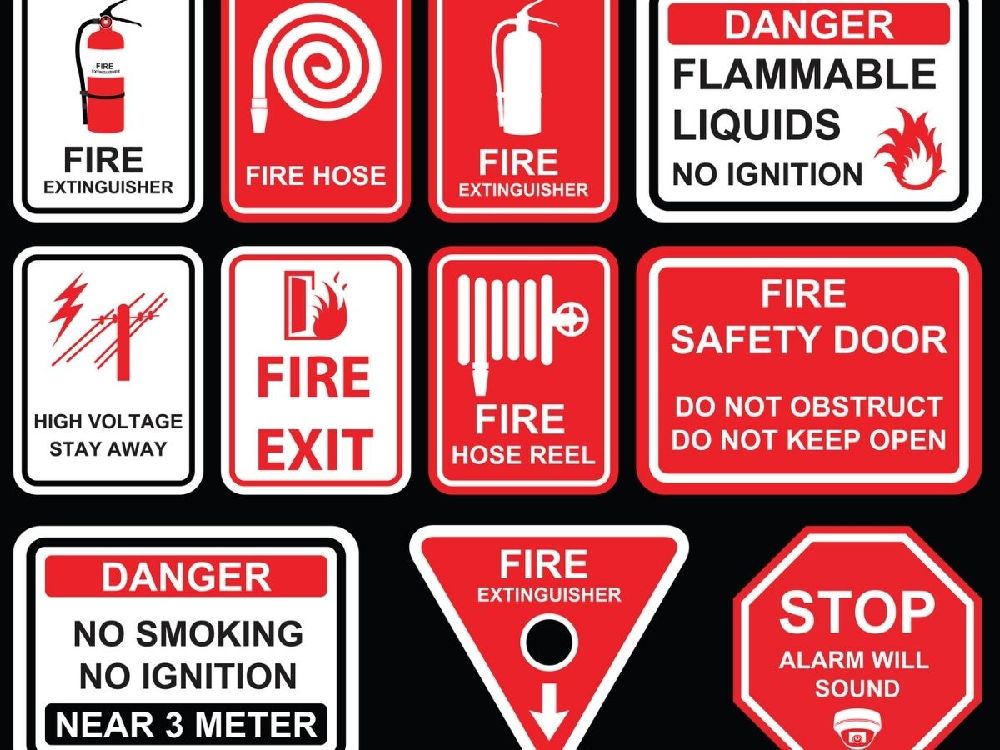
Signage is a compliance requirement, not a suggestion. The wording, placement, and format of fire safety door signs are set out in NCC Volume 1, Part D2.23.
The required wording depends on the door's function:
- Self-closing fire doors must display: FIRE SAFETY DOOR – DO NOT OBSTRUCT – DO NOT KEEP OPEN
- Doors from fire-isolated exits must display: FIRE SAFETY DOOR – DO NOT OBSTRUCT
The lettering must be legible and placed on both sides of the door where required.
Fire safety door signage that is missing, damaged, or showing incorrect wording is a common audit finding. If you need help with correct installation, our fire equipment sign installation guide covers what's required.
Fire Safety Door Accreditation – Who Can Install or Sign Off?
This is where things vary across Australia, and it pays to understand your state's requirements.
Western Australia has no dedicated fire door licence class. Installation must be carried out by a registered builder or under the supervision of a qualified person. Certification is generally provided by a building surveyor or an FPAS-accredited Fire Safety Assessor through the FPA Australia programme.
Queensland has specific QBCC Passive Fire Protection licence classes that cover both installation and certification of fire doors, so you'll need to confirm the credentials of anyone carrying out this work.
New South Wales updated its framework in February 2025. Installation and maintenance can now be carried out by non-accredited persons, but the Annual Fire Safety Statement must still be signed off by an accredited Fire Safety Practitioner.
If you're unsure about the requirements for your premises, Fullworks Fire Safety offers free fire safety surveys to help you identify what's in place and what may need attention.
What We See Going Wrong with Fire Doors in WA
Fire door compliance is an area where small issues can go unnoticed until an audit or insurance renewal brings them to light. A 2024 DMIRS audit of WA apartment buildings found that a significant proportion of buildings had fire doors that failed the closure test, meaning the door did not fully close and latch from an open position.
Common issues we encounter include:
- Doors propped open or held by wedges, disabling the self-closing function.
- Intumescent seals that have been painted over or are missing altogether.
- Incorrect or absent fire safety door signage.
- Modifications to the door leaf (holes drilled, hardware changed) that void the original certification.
- No record of inspections being carried out.
If your building hasn't had a fire door servicing check recently, it's worth scheduling one before your next Essential Services inspection or insurance renewal. A fire safety survey is a good starting point if you're not sure where your building currently stands.
Frequently Asked Questions
What's the difference between a fire door and a fire safety door?
In Australian buildings, the terms are generally used interchangeably. Technically, a "fire safety door" is the term used in the NCC and on required signage, while "fire door" is more commonly used in everyday conversation and trade. Both refer to a doorset that has been tested and certified to resist fire and smoke for a rated period. The key is that the door is a certified system, not just a solid or heavy door.
Do all fire safety doors in Australia need the "Do Not Obstruct" sign?
Yes. Under NCC Part D2.23, all fire safety doors must display approved signage. The exact wording depends on the door type. Self-closing doors within a building require both "DO NOT OBSTRUCT" and "DO NOT KEEP OPEN," while doors from fire-isolated exits require "DO NOT OBSTRUCT" only. Missing or incorrect signage is a compliance failure.
How often must a fire safety door be inspected under AS 1851?
AS 1851-2012 requires an operational test every 3 months and a detailed inspection every 12 months. Both must be documented. Buildings subject to Essential Services reporting will need these records available for sign-off.
Who is qualified to certify or tag a fire safety door in Western Australia?
In WA, there is no dedicated fire door licence. Certification is typically carried out by a registered building surveyor or an FPAS-accredited Fire Safety Assessor under the FPA Australia programme. Always confirm credentials before accepting a certification.
Can I paint, drill, or modify a fire safety door leaf?
No. Any modification to the door leaf, frame, or hardware, including painting over seals, drilling holes, or fitting additional hardware not covered in the original test report, can void the door's FRL certification. If modifications are needed, you'll need to consult the original manufacturer or a qualified assessor before proceeding.


