
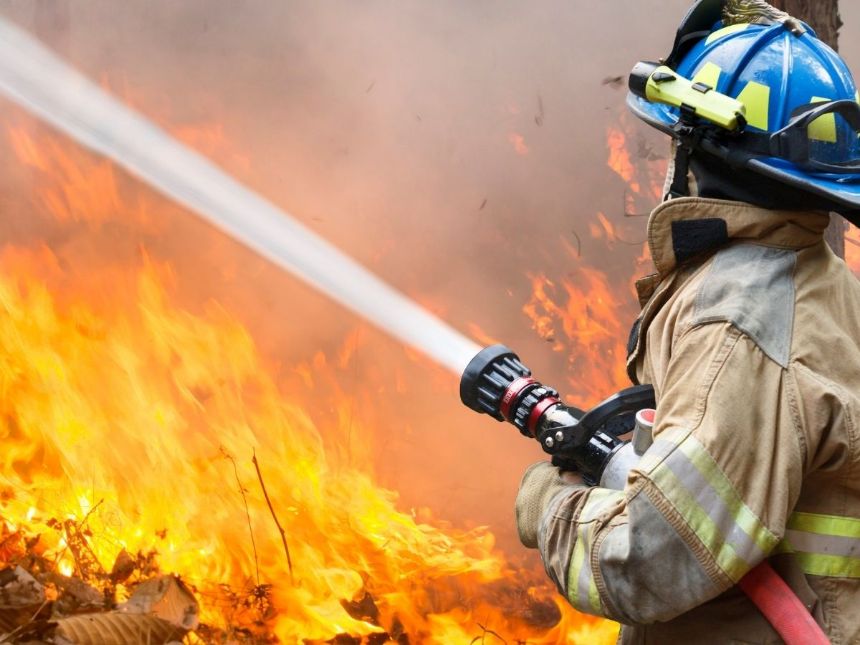
Fire incidents happen fast. According to the Fire & Rescue NSW Annual Report 2024/25, emergency services attended 143,927 incidents in 2024-25, including 4,587 residential structure fires in NSW alone. In many of those cases, first-attack firefighting equipment, including fire hose reels and portable fire extinguishers, made the difference between a minor incident and a major one.
So if your building has a fire hose reel installed, knowing how to use a fire hose reel correctly is genuinely worth your time.
What Is a Fire Hose Reel and How Does It Work?
A fire hose reel is a fixed piece of fire protection equipment mounted to the wall of a building. It consists of a reel of 36 metres of 19 mm non-kinking tubing connected directly to the building's water supply. When activated, it delivers a continuous supply of water at a minimum flow rate of 0.33 litres per second at 220 kPa, as required under AS 2441-2016.
The key components are straightforward:
- A stop valve that controls water flow (open and closed positions)
- A nozzle offering jet or fog spray patterns
- A hose guide that keeps the hose directed as you unreel it
- An anti-tamper seal that confirms the equipment hasn't been interfered with
Unlike portable fire extinguishers, which have limited capacity, a fire hose reel provides a continuous water flow for as long as the building's water supply holds. That makes it particularly suited to commercial and industrial settings where a fire could grow quickly if not controlled early. According to AS 2441, a properly positioned reel provides coverage up to a 40 metre radius from its location.
Australian Regulations: When Must You Have One?
Under the National Construction Code (NCC) Volume 1, clause E1D3, fire hose reels must be installed in any fire compartment exceeding 500 m², or on any storey with a floor area above that threshold. Building codes also require them to be installed and maintained to AS 2441, with ongoing fire safety equipment servicing carried out to AS 1851-2012.
If you manage strata, commercial, or industrial premises, it's worth confirming with your fire safety provider that your installation meets current NCC requirements. Council enforcement and insurance compliance are two areas where gaps in this area tend to surface at the worst possible time.
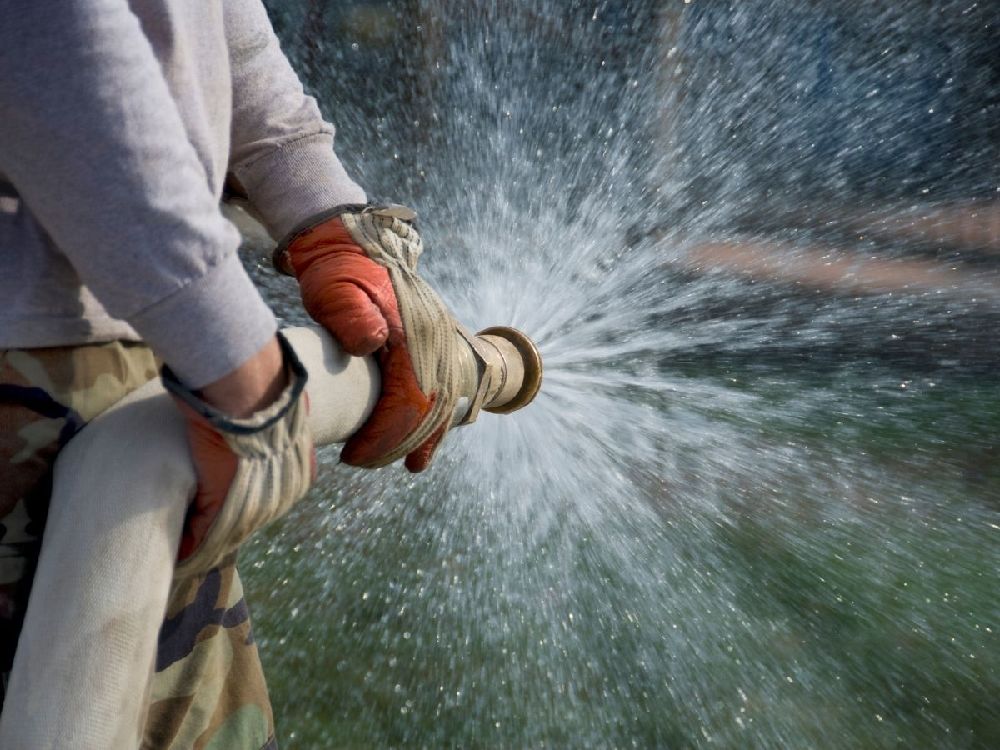
Step-by-Step: How to Use a Fire Hose Reel Safely
Only attempt to use a fire hose reel if you have received proper training, the fire is small and in its early stages, and an exit is always behind you.
- Raise the alarm and call 000. Always alert others and contact emergency services before attempting first-attack firefighting.
- Confirm the fire type. Only use a fire hose reel on Class A fires (ordinary combustibles such as wood, paper, and most plastics). Step back if you're unsure.
- Break the anti-tamper seal and turn the stop valve fully to the open position.
- Pull the hose towards the fire, unreeling the full hose length to avoid kinks that restrict water flow.
- Squeeze the nozzle to test the spray away from the fire first, then direct a steady stream at the base of the fire in a sweeping motion.
- Once the fire is controlled, close the nozzle, return the valve to the closed position, and rewind the hose evenly back onto the reel.
Keep a clear path to an exit at all times. If the fire grows or smoke becomes heavy, leave immediately and let the fire brigade handle it.
Can Fire Hose Reels be Used by Anyone?
Technically, any competent person can operate a fire hose reel. In practice, the question of "can fire hose reels be used by anyone" has a compliance dimension that businesses need to understand.
Under the NSW WHS Regulation 2017, a PCBU (person conducting a business or undertaking) is required to provide instruction and training to workers. AS 3745-2021 (Planning for Emergencies in Facilities) further recommends that occupants designated as part of a First-Attack Firefighting Team receive practical training at least every two years.
So while the equipment itself isn't restricted, your organisation has a legal duty to ensure people know how to use it properly before an emergency. That includes signage, training records, and a clear safety plan for your premises.
When Not to Use a Fire Hose Reel
This is important. Fire hose reels are not suitable for all fire scenarios.
Do not use a fire hose reel on:
- Electrical fires: Water conducts electricity. Using a hose reel near live electrical equipment creates a serious electrocution risk. Use a CO₂ or dry powder extinguisher instead.
- Class B fires (flammable liquids): Water can spread burning liquids, making the fire larger and more dangerous.
These limitations are among the most common sources of confusion in workplaces. It's also worth noting that with the rise of lithium-ion battery fires across Australian workplaces and homes, having the right combination of fire equipment, including both water-based reels and appropriate extinguisher types, has become increasingly important.
Keeping Your Fire Hose Reel Compliant: Inspection Requirements
Owning a fire hose reel isn't a set-and-forget arrangement. AS 1851-2012 Section 9 sets out the following routine inspection and servicing schedule:
Frequency | Requirement |
Monthly | Visual inspection (damage, obstructions, signage) |
Six-monthly | Functional test (water flow, valve operation) |
Annually | Flow and pressure test |
Every five years | Hydrostatic pressure test |
Staying on top of fire safety equipment testing is a compliance requirement, not just a recommendation. Missed inspections can affect your insurance coverage and put you at risk of council fire safety orders.
Get Your Fire Hose Reel Serviced with Confidence
At Fullworks Fire Safety, we provide scheduled fire safety equipment servicing and fire safety equipment testing for businesses across Perth Metro and Western Australia. Our fully qualified technicians carry out all work to AS 1851-2012, with transparent pricing and same-day documentation. If you're not sure your hose reels are compliant or you need a free initial survey, contact us and we'll get you sorted.
Good fire safety doesn't have to be complicated. We make it simple.
Disclaimer: This information is general guidance only and does not replace professional fire safety advice or training. Always follow current Australian Standards and site-specific procedures, and call 000 in an emergency.
Frequently Asked Questions
Can fire hose reels be used on electrical fires?
No. Water conducts electricity, making it dangerous to use a fire hose reel near live electrical equipment. For electrical fires, use a CO₂ or dry powder extinguisher instead.
How far does a standard fire hose reel reach?
A standard fire hose reel contains 36 metres of hose. Combined with the effective water throw from the nozzle, AS 2441 specifies a coverage radius of up to 40 metres from the reel location.
Do I need training to use a fire hose reel?
Yes. Under the NSW WHS Regulation 2017 (r.43), employers must provide instruction and training in the use of fire equipment. AS 3745-2021 recommends practical drills for designated first-attack teams at least every two years.
How often should fire hose reels be inspected in Australia?
AS 1851-2012 requires a monthly visual check, a six-monthly functional test, an annual flow and pressure test, and a five-yearly hydrostatic pressure test.
Are fire hose reels required in all commercial buildings?
Not in all buildings. Under the National Construction Code Volume 1 clause E1D3, fire hose reels are required where a fire compartment or storey exceeds 500 m² in floor area. Smaller offices below that threshold are not generally required to have them installed.


