There's a common assumption in Australian workplaces that fire safety is someone else's responsibility. The building owner handles it, or the strata manager, or whoever last signed the compliance paperwork. But when a small fire starts in an early stage and the nearest extinguisher is out of date, overdue for service, or simply the wrong type, that assumption becomes a serious problem.
Fire Extinguishers: The Foundation of Workplace Fire Safety Equipment
Fire extinguishers are the first line of defence against small fires, and the type you choose matters more than most people realise. Under AS 2444:2001, selection and placement of portable extinguishers must reflect the nature of the fire risks present in your workplace.
The three most common types for office and commercial settings are:
- ABE Dry Chemical Powder – A versatile all-rounder suitable for Class A (paper, wood, cardboard), Class B (flammable liquids), and Class E (electrical) fires. Our 4.5kg ABE Dry Chemical Powder Fire Extinguisher is one of the most widely used options for general office environments.
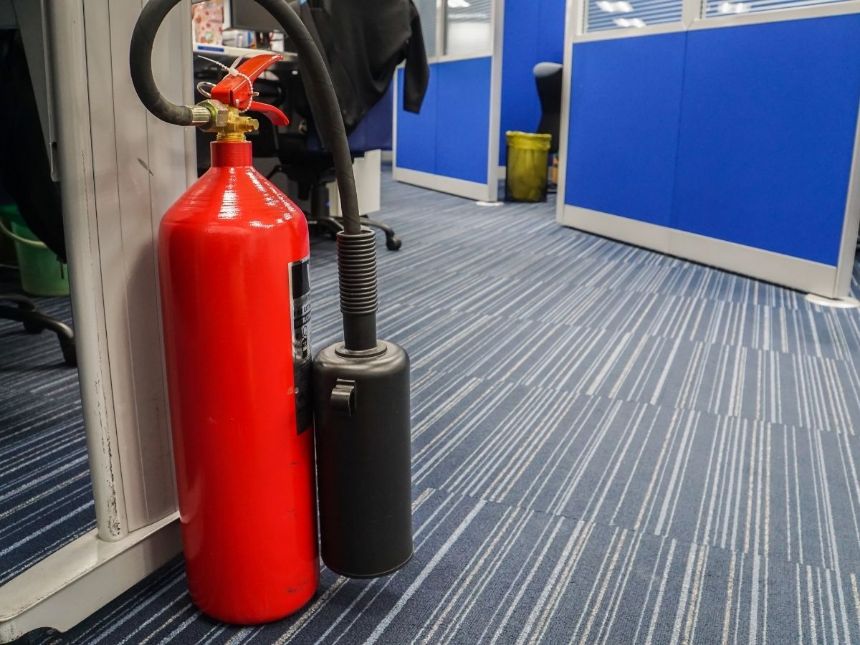
- CO₂ (Carbon Dioxide) – Specifically designed for electrical fires and ideal around server rooms, switchboards, and areas with high concentrations of electronic equipment. With lithium-ion battery fires on the rise following incidents like the 2025 Cheltenham warehouse fire, CO₂ coverage has become increasingly important. Our 2kg CO₂ Carbon Dioxide Fire Extinguisher suits these scenarios well.
- Wet Chemical – Required in commercial kitchens where cooking oils and fats present a Class F fire risk. Our 7Lt Wet Chemical Fire Extinguisher is designed for exactly this environment.
If you're unsure which extinguisher suits your workplace, we're happy to assist.
Fire Blankets for Kitchens and Personal Protection
A fire blanket is one of the simplest and most effective pieces of fire protection equipment available. It works by smothering a fire and cutting off its oxygen supply, making it ideal for containing small cooking fires or wrapping around a person if their clothing catches alight.
They're required to comply with AS 2444 and should be installed in kitchens and any area where cooking or heating equipment is present. Our 1.2m x 1.8m Fire Blanket is a practical and affordable option that meets Australian Standards requirements.
Fire Hose Reels for Larger Buildings
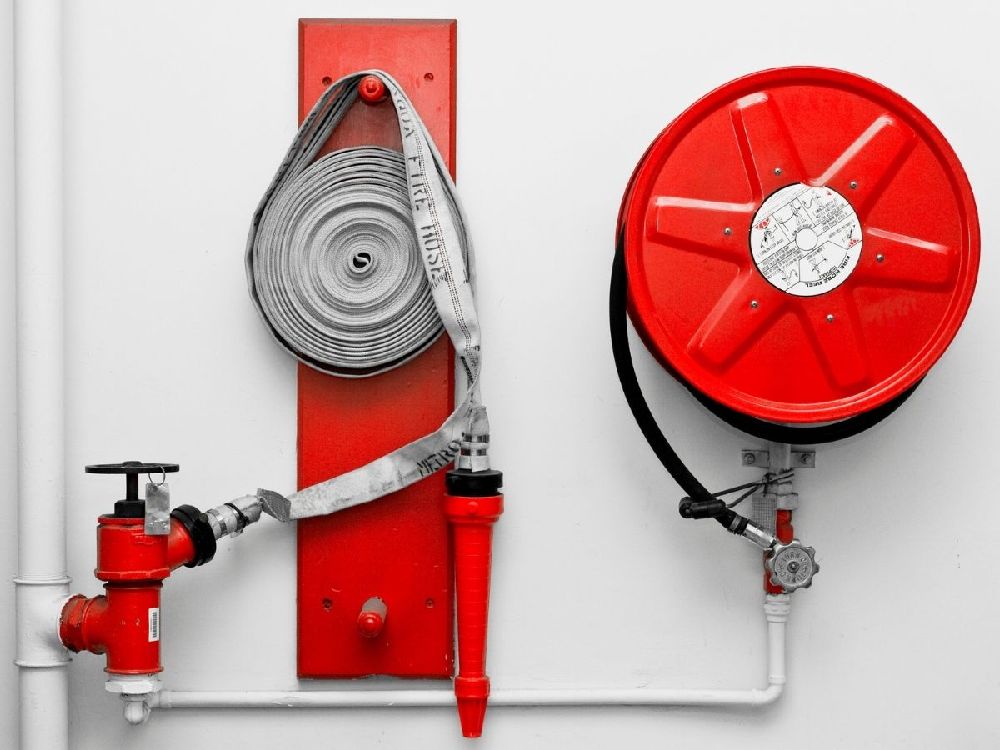
In bigger commercial buildings, fire hose reels provide a sustained water supply for first-attack firefighting on Class A fires involving paper, wood, and other combustibles. They're governed by AS 2441 and are typically required by the National Construction Code in buildings above a certain size.
Hose reels must be correctly installed, regularly tested, and clearly accessible. They're not a substitute for portable extinguishers but work well alongside them as part of a layered fire protection approach.
Smoke Detectors and Fire Alarm Systems
Early detection gives occupants time to evacuate and emergency services time to respond. Smoke alarms and heat detectors, installed and maintained to AS 1670.1-2018, are a mandatory part of most commercial building fire systems.
Interconnected, photoelectric smoke detectors are now the standard under the AS 3786:2023 update, ensuring that when one alarm activates, all alarms in the building respond. Our fire systems testing and servicing covers detection systems, alarm panels, and associated components.
Emergency and Exit Lighting
When a fire occurs, a power outage often follows. Emergency and exit lighting, required under AS 2293.1-2018, ensures occupants can safely locate exits and evacuation routes even without mains power.
This equipment needs regular testing to confirm battery backup systems are functional. We provide emergency and exit lighting testing and servicing to keep your building compliant with Australian Standards.
Fire Doors and Passive Fire Protection
Fire doors play a critical role in slowing the spread of fire and smoke through a building, giving occupants more time to evacuate safely. They must comply with AS 1905.1-2015 and AS 1530.4-2021 and require regular inspection to ensure seals, closers, and latches are all functioning correctly.
Passive fire protection is often overlooked compared to active equipment like extinguishers, but it forms an essential part of any building's overall fire safety system.
Sprinkler Systems
Sprinkler systems, designed to AS 2118, provide automated suppression and are particularly valuable in larger buildings or high-risk environments. They work alongside portable fire safety equipment to provide a more comprehensive level of protection.
Installation and maintenance of sprinkler systems requires specialist expertise. If your building has an existing system, ensuring it's regularly tested and serviced is essential.
Maintenance Tags and Anti-Tamper Seals
This one is easy to overlook, but it matters during an inspection. Under AS 1851:2023, all portable fire equipment must carry current service tags confirming it has been inspected and tested within the required intervals (typically every six months). Our fire equipment anti-tamper seals help demonstrate equipment integrity between service visits.
Keeping Your Workplace Equipment Compliant Year-Round
Buying the right equipment is only part of the job. Under the Model Work Health & Safety Regulations, every Person Conducting a Business or Undertaking (PCBU) must ensure fire safety equipment is maintained and suitable for the risks present in the workplace.
That means scheduled fire extinguisher servicing at least every six months in line with AS 1851, along with regular checks on all other installed systems. It also means your team knows how to use the equipment. Our First Line of Defence fire safety training is a one-hour on-site course that gives your employees the confidence to act in an emergency.
If you're ready to review what your workplace has in place, get in touch with our team for straightforward advice and an obligation-free assessment.
The information provided in this article is intended as general guidance only and should not be considered a substitute for professional fire safety advice, compliance assessment, or a detailed inspection of your workplace. Fire safety requirements vary depending on your building type, occupancy, layout, risks, and applicable legislation and Australian Standards.
Frequently Asked Questions
What fire safety equipment is legally required in Australian offices?
Under the Model Work Health & Safety Regulations, all workplaces must provide and maintain fire-fighting equipment that is suitable for the nature of the work and associated risks. At minimum, this typically includes portable fire extinguishers, smoke detection, and emergency exit lighting. Requirements vary depending on building type, occupancy, and state or territory regulations.
What is the difference between an ABE and a CO₂ fire extinguisher?
An ABE extinguisher uses dry chemical powder and covers Class A (combustibles like paper and wood), Class B (flammable liquids), and Class E (electrical) fires. A CO₂ extinguisher uses pressurised carbon dioxide and is designed specifically for Class E electrical fires. CO₂ leaves no residue, making it preferable around sensitive electronics.
How often must workplace fire equipment be serviced?
Under AS 1851:2023, portable fire equipment including extinguishers must be inspected and serviced at six-monthly intervals. Fixed systems such as sprinklers, alarms, and emergency lighting also have specific testing schedules under the same standard.
Can I use a fire blanket on electrical fires?
A fire blanket is not recommended for electrical fires. It is designed to smother Class A fires and Class F cooking fires. For electrical fires, a CO₂ extinguisher is the correct piece of equipment to use.
How many fire extinguishers does my workplace need?
The number required depends on your building's floor area, layout, occupancy, and the types of fire risks present. AS 2444:2018 provides guidance on selection and placement. If you're unsure, we recommend speaking with a qualified fire safety technician to assess your specific requirements.


